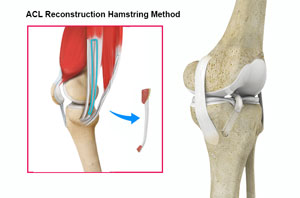
What is ACL Reconstruction with Hamstring Tendon?
ACL reconstruction with a hamstring tendon graft is a common surgical procedure to repair a torn anterior cruciate ligament (ACL) using the patient's own hamstring tendons. The hamstring graft is preferred by many surgeons due to its strong biomechanical properties and relatively low donor site morbidity.
What are the Indications for ACL Reconstruction with Hamstring Tendon?
Anterior cruciate ligament is one of the four major ligaments of the knee that connects the femur (thigh bone) to the tibia (shin bone) and helps stabilise your knee joint. Anterior cruciate ligament prevents excessive forward movement of the lower leg bone (the tibia) in relation to the thigh bone (the femur) as well as limits rotational movements of the knee.
A tear of this ligament can make you feel as though your knees will not allow you to move or even hold you up. Anterior cruciate ligament reconstruction surgery with the hamstring tendon is indicated to reconstruct the torn ligament of your knee and restore the normal function of the knee.
What Does Preparation for ACL Reconstruction with Hamstring Tendon Involve?
In general, preparation for ACL reconstruction with a hamstring tendon graft may include the following:
- Comprehensive medical history, physical examination, and imaging studies (MRI, X-rays) to assess the extent of the injury and any associated damage.
- Physical therapy before surgery to reduce swelling, restore range of motion, and strengthen the muscles around the knee.
- You should inform your doctor of any medications or supplements you are taking or any allergies you may have.
- You may be asked to stop taking certain medications, such as blood thinners and anti-inflammatories or other supplements that may increase the risk of bleeding during surgery.
- You should refrain from alcohol and tobacco at least a few days prior to surgery and several weeks after, as it can hinder the healing process.
- You should not consume any solids or liquids at least 8 hours prior to surgery.
- A signed informed consent form will be obtained from you after the pros and cons of the surgery have been explained.
What is the Procedure for ACL Reconstruction with Hamstring Tendon?
In general, ACL reconstruction with a hamstring tendon graft may include the following steps:
- Anaesthesia: The patient is given general or regional anaesthesia.
- Incisions: Small incisions (portals) are made around the knee for arthroscopic instruments.
- Arthroscopic Examination: An arthroscope is inserted to visualise the knee joint and confirm the extent of the damage.
- Graft Harvesting:
- An incision is made over the proximal tibia to access the hamstring tendons (semitendinosus and gracilis).
- The tendons are carefully dissected and harvested using a tendon stripper.
- The tendons are then cleaned, folded, and prepared to create a strong graft, usually doubled or tripled for added strength.
- Torn ACL Removal: The remnants of the torn ACL are removed arthroscopically.
- Tunnel Creation:
- Tunnels are drilled in the femur and tibia at specific angles to secure the graft.
- These tunnels will accommodate the new ligament and facilitate its proper positioning and tension.
- Graft Placement:
- The prepared hamstring graft is threaded through the tunnels in the femur and tibia.
- The graft is secured using fixation devices such as screws, buttons, or staples, ensuring it is appropriately tensioned to replicate the natural ACL function.
- Graft Tensioning: The graft is tensioned to ensure proper stability.
- Closure: Incisions are closed with sutures or staples, and the knee is bandaged.
What Does Postoperative Care for ACL Reconstruction with Hamstring Tendon Involve?
In general, postoperative care for ACL reconstruction with a hamstring tendon graft may include the following:
- Immobilisation: The knee may be placed in a brace or immobiliser to limit movement and protect the new graft.
- Cryotherapy: Ice packs or cryotherapy devices are used to reduce swelling and pain.
- Pain Management: Pain medications and anti-inflammatory drugs are prescribed as needed.
Rehabilitation:
- Phase 1 (0-2 weeks): Focus on reducing swelling, maintaining range of motion, and initiating gentle weight-bearing exercises.
- Phase 2 (2-6 weeks): Gradual increase in weight-bearing and strengthening exercises, focusing on the quadriceps and hamstring muscles.
- Phase 3 (6-12 weeks): Continued strengthening, balance, and proprioception exercises. Progression to more dynamic activities.
- Phase 4 (3-6 months): Advanced strengthening, agility, and sport-specific drills. Preparing for a return to sports.
- Phase 5 (6-12 months): Full return to sports and high-impact activities with continued focus on strength, agility, and preventing reinjury.
What are the Risks and complications of ACL Reconstruction with Hamstring Tendon?
Possible risks and complications associated with ACL reconstruction with hamstring method include:
- Numbness
- Infection
- Blood clots (Deep vein thrombosis)
- Nerve and blood vessel damage
- Failure of the graft
- Loosening of the graft
- Decreased range of motion
- Crepitus (crackling or grating feeling of the kneecap)
- Pain in the knee
- Repeat injury to the graft
Prognosis
ACL reconstruction with a hamstring tendon graft has a high success rate, with most patients returning to their previous level of activity. Successful outcomes depend significantly on adherence to a comprehensive rehabilitation program, including regular exercises to maintain strength, flexibility, and stability, using proper techniques and preventive training programs to reduce the risk of re-injury, and regular check-ups with the orthopaedic surgeon or physical therapist to monitor progress and address any issues.