What is a Meniscus?
The two wedge-shaped cartilage pieces present between the thigh bone and the shinbone are called meniscus. They stabilise the knee joint and act as shock absorbers.
What is a Meniscal Tear?
A meniscal tear is a common knee injury in athletes, especially those involved in contact sports. A sudden bend or twist in your knee causes the meniscus to tear. Elderly people are more prone to degenerative meniscal tears as the cartilage wears out and weakens with age.
What are the Symptoms of Meniscal Tears?
A torn meniscus causes pain, swelling, stiffness, or a catching or locking sensation in your knee, making you unable to move your knee through its complete range of motion.
How are Meniscal Tears Diagnosed?
Your surgeon will examine your knee, and evaluate your symptoms and medical history before suggesting a treatment plan.
What are the Treatment Options for Meniscal Tears?
The treatment depends on the type, size and location of the tear, as well your age and activity level. If the tear is small with damage only in the outer edge of the meniscus, non-surgical treatment may be sufficient. However, if the symptoms do not resolve with non-surgical treatment, surgical treatment may be recommended.
Surgical Treatment for Meniscal Tears
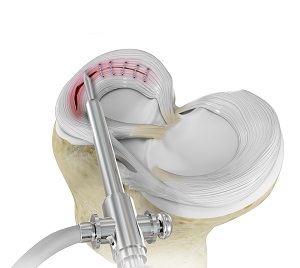
Knee arthroscopy is a commonly recommended surgical procedure for meniscal tears.
Surgery can be performed using arthroscopy where a very small camera will be inserted through a very small incision to enable your surgeon to view the inside of your knee on a large screen. The surgery will be performed through other small incisions.
The surgical techniques include meniscus removal (meniscectomy), meniscus repair, and meniscus replacement. During meniscectomy, small instruments called shavers or scissors may be used to remove the torn meniscus. In arthroscopic meniscus repair the torn meniscus will be pinned or sutured depending on the extent of tear. Meniscus replacement or transplantation involves the replacement of a torn cartilage with the cartilage obtained from a donor or a cultured patch obtained from a laboratory. It is considered as a treatment option to relieve knee pain if you have undergone meniscectomy.
Prognosis and Recovery
Non-Surgical Treatment: Many people recover well with conservative treatment, especially if the tear is small and located in the outer third of the meniscus.
Surgical Treatment:
- Meniscectomy: Recovery can take several weeks, with physical therapy starting soon after surgery to restore function and strength.
- Meniscus Repair: Recovery can take longer, often several months, due to the need for the meniscus to heal. Weight-bearing activities may be limited initially.
- Meniscus Transplantation: Recovery is longer, and success depends on the individual patient's condition and adherence to post-surgical rehabilitation.