What is Shoulder Labral Repair?
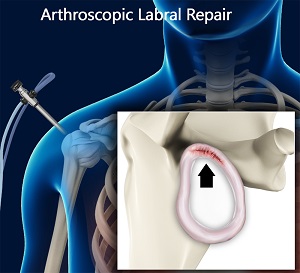
A shoulder labral repair is a surgical procedure used to repair a torn labrum in the shoulder joint. The labrum is a ring of cartilage that surrounds the socket of the shoulder (glenoid), helping to stabilise the joint by deepening the socket and providing attachment points for various ligaments and the biceps tendon. Tears in the labrum can lead to shoulder instability, pain, and decreased function.
Indications for Labral Repair
- Persistent shoulder pain and instability despite conservative treatments.
- Recurrent shoulder dislocations.
- Significant labral tears confirmed by imaging studies (e.g., MRI).
- Functional limitations that affect daily activities or sports performance.
Preparation for Labral Repair
In general, preparation for shoulder arthroscopy may include the following:
- A comprehensive medical evaluation will be conducted. This may include a review of your medical history, physical examination, blood tests, and imaging studies for detailed evaluation of structures of the shoulder joint.
- You should inform your doctor about any pre-existing medical conditions, allergies, medications, or supplements you are taking.
- Some medications, such as blood thinners, may need to be adjusted or temporarily stopped before the surgery to minimise the risk of bleeding.
- You should refrain from eating or drinking for a specified period before the surgery.
- You should arrange for someone to drive you home after the procedure
- You will be signing an informed consent form
Surgical Procedure for Labral Repair
Labral repair is usually performed arthroscopically, using small incisions and a camera (arthroscope) to guide the surgery. In general, the procedure involves the following steps:
- The patient is usually placed under general anaesthesia.
- The shoulder is positioned to allow optimal access to the joint.
- Small incisions (portals) are made around the shoulder to insert the arthroscope and surgical instruments.
- The surgeon inspects the shoulder joint to assess the extent of the labral tear and any other associated injuries.
- The torn edges of the labrum are debrided (cleaned up) if necessary.
- Anchors with sutures are placed into the bone near the labral tear.
- The labrum is then reattached to the bone using the sutures to restore its normal position and function.
- The instruments are removed, and the incisions are closed with sutures or steri strips.
Postoperative Care and Rehabilitation
- The shoulder is typically immobilised in a sling for several weeks to protect the repair and allow initial healing.
- You may experience pain, swelling, and discomfort in the shoulder area. Pain and anti-inflammatory medications are provided as needed to address these.
- You may also apply ice packs on the shoulder area to help reduce swelling and pain.
- Instructions on incision site care and bathing will be provided to keep the wound clean and dry.
- Gradual physical therapy is initiated to restore range of motion, strength, and stability.
- Patients are advised to avoid heavy lifting, overhead activities, and contact sports for several months.
- A periodic follow-up appointment will be scheduled to monitor your progress.
Risks and Complications of Labral Repair
Potential risks and complications of labral repair include:
- Infection
- Bleeding
- Stiffness
- Recurrent instability
- Nerve injury
- General anaesthesia risks