What is Revision Knee Replacement?
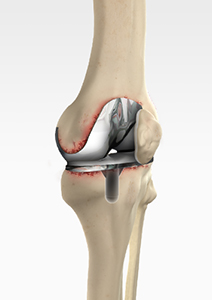
Revision knee replacement surgery involves replacing part or all of your previous knee prosthesis with a new prosthesis. Although total knee replacement surgery is successful, sometimes the procedure can fail due to various reasons and require a revision surgery.
Anatomy of the Knee
The knee is made up of the femur (thighbone), tibia (shinbone) and patella (kneecap). The lower end of the femur meets the upper end of the tibia at the knee joint. A small disk of bone called the patella rests on a groove on the front side of the femoral end. The fibula, another bone of the lower leg, forms a joint with the shinbone. The bones are held together by protective tissues, ligaments, tendons, and muscles. Synovial fluid within the joint aids in the smooth movement of the bones over one another. The meniscus, a soft crescent-shaped area of cartilage between the femur and tibia, serves as a cushion and helps absorb shock during motion.
What are the Indications for Revision Knee Replacement?
Revision knee replacement surgery may be advised if you have one or more of the following conditions:
- Trauma to the knee joint
- Chronic progressive joint disease
- Increased pain in the affected knee
- Worn out prosthesis
- Knee instability or a feeling of giving way while walking
- Loosening of the prosthesis
- Infection in the prosthetic joint
- Weakening of bone around the knee replacement - a process known as osteolysis (bone loss)
- Stiffness in the knee
- Leg length discrepancy
- Fracture
What Does Preparation for Revision Knee Replacement Involve?
In general, preparation for revision knee replacement may include the following:
- Review of the patient's medical history, including previous surgeries, underlying health conditions, medications, and allergies.
- Detailed history of the original knee replacement and any issues experienced since.
- Thorough physical examination of the knee to assess pain, range of motion, stability, and function.
- Imaging studies such as x-rays, CT scans or MRI to evaluate condition of the implant, bone quality, and knee structures to identify any complications such as loosening, wear, or infection.
- Medical clearance from the concerned physicians if the patient has a history of conditions such as heart disease
- Smoking cessation is strongly recommended for smokers as smoking can impair healing and increase the risk of complications.
- Instructions to avoid eating or drinking at least 8 hours prior to surgery.
What is the Procedure for Revision Knee Replacement?
Revision knee replacement surgery may involve the replacement of one or all the components.
The surgery is performed under general anaesthesia. Your surgeon makes an incision over your knee to expose the knee joint. The kneecap along with its ligament may be moved aside so that there is enough room to perform the operation. Then, the old femoral component of the knee prosthesis is removed. The femur is prepared to receive the new component. In some cases, the damaged bone is removed and bone graft or a metal wedge may be used to make up for the lost bone.
Next, the tibial component along with the old plastic liner is removed. The damaged bone is cut and the tibia is prepared to receive the new component. Like the femur, the lost bone is replaced either by a metal wedge or bone graft. Then, a new tibial component is secured to the end of the bone using bone cement. A new plastic liner will be placed on top of the tibial component. If the patella (kneecap) has been damaged, your surgeon will resurface and attach a plastic component. The tibial and femoral components of the prosthesis are then brought together to form the new knee joint, and the knee muscles and tendons are reattached. Surgical drains are placed for the excess blood to drain out and the incision is closed.
What Does Postoperative Care for Revision Knee Replacement Involve?
You will be taken to the recovery room and monitored for any complications. You will be given pain medication to keep you comfortable. Antibiotics may also be prescribed to reduce the risk of infection. Ice, compression, and elevation of the knee will help minimise swelling and pain. You may walk with the help of a walker or cane for the first 1-2 weeks after surgery. A physical therapist will advise you on an exercise program to follow for 4 to 6 months to help maintain range of motion and restore your strength. You may perform exercises such as walking, swimming and biking but high impact activities such as jogging should be avoided. You will be given specific instructions regarding activities. Eating a healthy diet and not smoking will promote healing.
What are the Risks and Complications of Revision Knee Replacement?
Like all major surgical procedures, there may be certain risks and complications involved with revision knee replacement surgery. These include:
- Stiffness in the knee
- Infection
- Bleeding
- Formation of blood clots in the leg veins
- Injury to nerves or blood vessels
- Prosthesis failure
- Patella (kneecap) dislocation
- Ligament injuries
Prognosis
Revision knee replacement is a complex and technically demanding procedure aimed at resolving issues with a previous knee implant and restoring knee function. Successful outcomes depend on thorough preoperative planning, skilled surgical technique, and diligent postoperative rehabilitation. Early diagnosis, appropriate management of complications, and patient adherence to rehabilitation protocols are essential for achieving the best possible results.