What is Shoulder Arthroscopy?
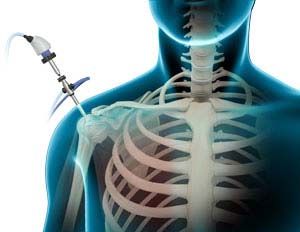
Shoulder arthroscopy is a minimally invasive diagnostic and surgical procedure for conditions and injuries involving the bones, cartilage, tendons, ligaments, and muscles of the shoulder joint.
Shoulder Anatomy
The shoulder is a highly movable body joint that allows various movements of the arm. It is a ball and socket joint, where the head of the humerus (upper arm bone) articulates with the socket of the scapula (shoulder blade), which is called the glenoid. The two articulating surfaces of the bones are covered with cartilage, which prevents friction between the moving bones. The cartilage is lubricated by synovial fluid. Tendons and ligaments around the shoulder joint provide strength and stability to the joint.
Indications for Shoulder Arthroscopy
Shoulder arthroscopy is indicated to treat the following shoulder conditions when conservative treatment such as medication and therapy fails to relieve pain and disability:
- Shoulder impingement
- Rotator cuff tear
- Frozen shoulder or stiffness of the shoulder joint
- Shoulder instability
- Biceps rupture
- Damaged cartilage or ligaments
- Bone spurs or bony projections
- Arthritis of the collarbone
Preparation for Shoulder Arthroscopy
In general, preparation for shoulder arthroscopy may include the following:
- A comprehensive medical evaluation will be conducted. This may include a review of your medical history, physical examination, blood tests, and imaging studies for detailed evaluation of structures of the shoulder joint.
- You should inform your doctor about any pre-existing medical conditions, allergies, medications, or supplements you are taking.
- Some medications, such as blood thinners, may need to be adjusted or temporarily stopped before the surgery to minimise the risk of bleeding.
- You should refrain from eating or drinking for a specified period before the surgery.
- You should arrange for someone to drive you home after the procedure
- You will be signing an informed consent form
Shoulder Arthroscopy Procedure
Your surgeon performs shoulder arthroscopy under general or regional anaesthesia. You may be positioned lying down on your side with your arm propped up or sitting in a semi-seated position. Sterile fluid is injected into the shoulder joint to expand the surgical area, so your surgeon has a clear view of the damage and room to work. A button-sized hole is made in the shoulder and the arthroscope is inserted. Your surgeon can view images captured by the camera in the arthroscope on a large monitor. Surgical instruments are introduced into the joint through separate small holes to remove and repair the damage to the joint. After surgery, the instruments are removed, and the incisions are closed with stitches or small sterile bandage strips.
Postoperative Care for Shoulder Arthroscopy
After the surgery, the small surgical wounds take a few days to heal and the surgical dressing is replaced by simple Band-Aids. The recovery time depends on the type and extent of the problem for which the procedure was performed. Pain medications are prescribed to keep you comfortable. The arm of the affected shoulder is placed in a sling for a short period. Physical therapy is advised to improve shoulder mobility and strength after the surgery.
Advantages of Shoulder Arthroscopy
The advantages of arthroscopy compared to open surgery with a large incision include:
- Less pain
- Fewer complications
- Shorter hospital stays
- Faster recovery
Risks and complications of Shoulder Arthroscopy
Complications of shoulder arthroscopy include infection, bleeding, damage to nearby nerves or blood vessels, or delayed healing after the surgery. In certain cases, stiffness of the shoulder joint may occur after the surgery. It is important to participate actively in your physical therapy to prevent this from occurring.